Why I Don’t Offer Motiva Breast Implants
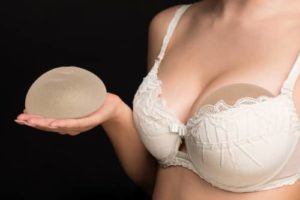
Motiva breast implants have attracted a great deal of attention since the FDA approved the SmoothSilk Round and SmoothSilk Ergonomix implants for breast augmentation in the United States in 2024. Patients ask me about Motiva implants regularly, especially after reading about their surface, natural movement, and the Preservé technique associated with the system.
I do not offer Motiva implants, and I am not planning to add them to my practice at this time.
I have extensive experience with Natrelle implants, I know how those breast implants behave in surgery, and they give me the range of sizes, profiles, and gel cohesivity I need. For most breast augmentation patients, the brand name is only one part of a much larger decision.
What Are Motiva Breast Implants?
Motiva breast implants are silicone gel implants made by Establishment Labs. The FDA approved the Motiva SmoothSilk Round and SmoothSilk Round Ergonomix implants for primary and revision breast augmentation in women aged 22 and older in September 2024.
The Round implant maintains a rounder contour, while the Ergonomix implant is designed to shift somewhat with body position. Both use cohesive silicone gel and the company’s SmoothSilk surface.
Patients sometimes ask whether Motiva is fundamentally different from a “gummy bear” implant. Both Motiva and the Natrelle implants I use include cohesive silicone gel options. “Gummy bear” is an informal term referring to gel cohesiveness, not a separate category of surgery.
What I Continue to Use
I currently use more Allergan Natrelle implants for breast augmentation. Natrelle offers several smooth silicone breast implant options with different levels of gel cohesivity, along with a broad range of base widths and profiles.
Two implants with the same volume can create very different shapes. A 250 cc implant can be broad with less projection or narrower with greater projection. The right dimensions depend on the patient’s chest width, tissue coverage, and the shape we are trying to create.
I know the Natrelle system well. Years of experience with an implant family give a plastic surgeon practical information about how its dimensions translate on different chest walls and how profile or volume changes affect breast shape.
Implant Dimensions Matter More Than the Logo
Patients often arrive at consultation focused on a particular implant brand. I spend more time looking at breast width, chest-wall shape, existing breast tissue, skin quality, nipple position, asymmetry, and the amount of upper-pole fullness the patient wants.
Those measurements determine the range of implants that actually make sense.
For a natural-looking breast augmentation, the implant has to fit the patient’s frame. An implant that is too wide can extend beyond the natural breast footprint. Too much projection can produce a less natural result, while an implant that is simply too large can place additional stress on the skin and natural breast tissue.
During surgery, I use sizers when they are helpful. This allows me to evaluate shape and proportion before selecting the final implant. I have written before about why proportion matters in breast augmentation, and implant selection is one of the clearest examples.
Motiva Implants, SmoothSilk, and Capsular Contracture Risk
Motiva’s SmoothSilk surface is one feature that distinguishes the implant. The FDA classifies the currently approved Motiva implants as smooth-surface devices, and patients often ask whether that surface changes capsular contracture risk.
I understand why patients are interested in the technology. Motiva has clinical data supporting its FDA approval, and it is a legitimate breast implant option in the United States.
Breast implant safety also requires a broader discussion. Capsular contracture, rupture, infection, implant malposition, changes in sensation, and revision surgery are possible complications with breast implants generally. A plastic surgeon should explain these risks rather than treating one surface or brand as a substitute for a complete safety discussion. No current implant eliminates capsular contracture risk, and breast implants are not lifetime devices. Long-term monitoring remains part of breast surgery regardless of implant brand.
I continue using Natrelle because the system gives me the dimensions, gel options, and predictability I need. Motiva remains an FDA-approved option, but I have not seen a clinical reason in my own practice to presently switch implant systems.
What About Preservé?
Preservé has generated interest because it is marketed as a tissue-preserving approach to breast augmentation using Motiva implants. The system uses proprietary Motiva instruments to create a breast pocket through a relatively small incision while limiting disruption of native tissues.
Those principles are familiar to me. I have used smaller incisions, careful tissue handling, thoughtful implant selection, and intraoperative sizing for many years. When the anatomy calls for it, I place the implant behind the pectoral muscle for additional coverage and a smoother upper-breast transition.
Preservé uses its own instruments and pocket-creation method. My approach uses a different surgical technique, including submuscular placement when it best suits the anatomy. The broader principles of minimizing unnecessary tissue trauma and respecting breast anatomy have been part of careful breast surgery for a long time.
New Technology Still Has to Improve the Plan
Plastic surgery changes constantly. New implants, devices, and minimally invasive techniques appear regularly, and some become useful additions to practice.
I pay attention to those developments. I also need a clear reason to change something that is already working well. That is consistent with the way I think about technique and technology throughout plastic surgery.
Natrelle and Mentor offer FDA-approved silicone breast implants with a long clinical history. My preference comes from experience, familiarity, and the ability to select the dimensions and gel characteristics I need for the patient in front of me.
What Should You Ask During a Breast Augmentation Consultation?
During a breast augmentation consultation, I focus on why a particular implant fits your anatomy and the result you want.
Ask about width, projection, volume, gel cohesivity, and placement. Ask how much natural tissue you have covering the implant and how that affects the surgical plan. Your medical history, previous breast surgery, skin quality, body type, and aesthetic goals may also influence the recommendation.
A good consultation should explain why one implant fits your anatomy better than another. The plastic surgeon should also explain complications, long-term monitoring, and the possibility of future revision.
I will continue to use Natrelle or Mentor implants because I know the system well and can select the dimensions I need to create proportionate, natural-looking results. Motiva breast implants are another FDA-approved option, but they are not one I currently offer or plan to introduce into my practice.
If you are considering breast augmentation in Miami, a consultation gives us the opportunity to evaluate your anatomy and discuss the implant characteristics that make sense for you.